

Down The Rabbit Hole: The Six Wives of Henry VIII
Haunted BunnyDivorced. Beheaded. Died. Divorced. Beheaded. Survived.
Six wives over 38 years. Half a lifetime of English history. And one of the most-repeated mnemonics in you learn in school. The rhyme tells you how each of their stories with Henry ended, but not how they lived.
So let's go down the rabbit hole and look beyond the divorces, the drama and the beheadings. Who were the actual women who became queens to the most famous Tyrant King in History, and besides Henry why do we still remember them 500 years later? We're going to explore What they were doing before they became Queen of England, what they did with the title once they had it, and how each of them, in completely different ways, ended up leaving their mark on England's History.
Catherine of Aragon (1509–1533)

Catherine of Aragon was Queen of England for twenty-four years, longer than Henry's other five wives combined.
She arrived in 1501 as a Spanish princess, sixteen years old, betrothed to Henry's elder brother Arthur. But Arthur died five months into the marriage, and Catherine found herself stranded in a foreign country, technically a widow, broke, and waiting for Kings to decide what to do with her, It's likely Henry VII didn't want to lose the dowry paid by Spain, and Catherine was political useful as long as she remained in England. She waited eight years. Henry VII kept her short of money on purpose during this period, when the old king finally died and his second son took the throne, the new King Henry VIII married her almost immediately.
She was a serious woman, multilingual, theologically sharp, and politically experienced, both her mother Queen Isabella I and her father King Ferdinand II were King and Queen in their own right — together they ruled over a unified Spain following The Reconquista. When Henry went off to fight the French in 1513, he left Catherine as regent. She promptly oversaw the rout of a Scottish invasion at the Battle of Flodden, sending Henry the bloodied coat of the dead Scottish king as a trophy, and even lamented in her letter to Henry that she would have liked to have sent the Scottish King's corpse, but her advisors dissuaded her. Catherine had performed so well in her task as regent, and the defeat of The Scots had been so decisive that it even eclipsed Henry's own deeds in France.
Despite the success of the early years of their marriage and the mutual understanding and respect the two shared, Catherine had failed in her most important duty as queen. She had provided Henry with only one living heir, a girl. Henry still in the shadow of his father the Dynastic founded of The Tudors needed a male heir, and Catherine was no longer capable of providing one.
Henry's attempt to annul the marriage on the grounds that Catherine's previous marriage to his brother Arthur had made theirs invalid — dragged on for seven years and ultimately split England from the Roman Catholic Church. Catherine fought it the entire way. She refused to retire to a nunnery, refused the title of Dowager Princess, and refused to acknowledge any of it. She died at Kimbolton Castle in January 1536, still calling herself Queen of England in her final letter.
Anne Boleyn (1533–1536)

Three years on the throne. A thousand days. Possibly the most consequential thousand days in English religious history.
Anne arrived back in England in her early twenties after spending most of her teens at the French court — fluent in French, sharply educated, and tuned to a fashion and style of court behavior that Henry's circle had never seen before. Her sister Mary had been Henry's mistress already and had been quietly set aside. But Anne refused to be merely Henry's mistress. That refusal became the catalyst that would push Henry and England to break with Rome and begin tumultuous period of religious upheaval that threatened to throw the country back into the civil war.
Probably more than any other Anne is the wife who actually changed England drastically and permanently. The decision to break with Rome, the dissolution of the monasteries that followed, the Acts of Supremacy and Succession, the entire architecture of the English Reformation — none of it happens if Anne becomes merely another mistress. She brought reformist religious thinkers into Henry's orbit, lent him banned books, and helped shape the direction of the new English church. Anne and her families meteoric rise would be eclipsed only by their fall.
In January 1536 came the miscarriage, the same month Catherine of Aragon died, and like Catherine she had failed to provide Henry with a male heir. By May, Anne was on trial for adultery, incest, and treason. The evidence has been picked apart by every serious Tudor historian since, but Thomas Cromwell made certain the crimes stuck well enough for Anne to be sentenced to death. She was executed at the Tower on 19 May 1536 —, not by an axe, but by a French swordsman, brought in specifically, a final strange kindness by Henry.
There is a reason Anne Boleyn is the wife we all remember, the woman who is the basis for so many novels, films, tv shows and discussions. She is the woman who refused to become just another mistress, and in doing so changed the history of an entire kingdom.
Jane Seymour (1536–1537)

Married eleven days after Anne Boleyn's execution. Buried fifteen months later. The shortest reign of any of the six — and the only wife buried as Queen, many believe Henry truly loved Jane, and having given him a son, there's reason to think she would have been The Queen that survived Henry.
Jane was the quiet one, by deliberate construction. She had served both Catherine of Aragon and Anne Boleyn as a lady-in-waiting, she had a front row seat as Catherine and Anne lost Henry's favor from inside the chamber. When her own turn came, she presented herself as the opposite of Anne: pious, modest, English, uncontroversial. Her personal motto — Bound to obey and serve, was effectively a job description for the role she'd watched slip away from Catherine and doom Anne to death.
She gave Henry the son he wanted. Edward, born October 1537, was the legitimate male heir Henry had spent thirty years trying to produce. Jane died twelve days after the birth, almost certainly from childbed sepsis. Henry mourned her properly — wore black for three months, didn't remarry for over two years, and ultimately chose to be buried beside her at Windsor.
She is the wife it's easiest to underrate, because she did the one thing Henry actually wanted and then died before the marriage could fall apart. We will never know what a longer Jane Seymour reign would have looked like, but she is remembered for having done what neither Catherine or Anne had been able, she gave Henry what he wanted most.
Anne of Cleves (1540)

Married only six months and annulled by mutual agreement. Anne walked away with a generous settlement, the title "the King's Beloved Sister," and possibly the best deal anyone ever cut with Henry VIII.
The Anne of Cleves story is usually told as comedy — Henry didn't like the look of her, the portrait by Holbein had flattered her, the whole thing fell apart at first sight. That's broadly the official line, and Henry did push it hard. But it's worth taking seriously what Anne actually did once she realized the marriage was finished. She agreed to the annulment without fighting it, accepted the settlement, refused to go back to Cleves, and proceeded to spend the next seventeen years as one of the wealthiest women in England. She outlived Henry, outlived four of the other five wives, and maintained a good relationship with both Mary I and Elizabeth I.
She is the wife who read the situation correctly. The marriage was a diplomatic alliance with the German Protestant princes, when that alliance stopped being useful to Henry, the marriage had to go. Anne understood the assignment, exited cleanly, and lived comfortably ever after. Thomas Cromwell, who arranged the marriage for Henry was not so fortunate.
Catherine Howard (1540–1542)

She was probably about seventeen when she married Henry. He was forty-nine, obese, and increasingly paranoid, though in Catherine's case Henry's paranoia wasn't misplaced. She was a cousin of Anne Boleyn, part of the same powerful Howard family, same court faction, same playbook. And it ended at the same Tower, on the same block, in less than two years.
What gets lost in the "rose without a thorn" / "flighty teenager" framing is how young she actually was, how thoroughly she had been used by her own family, and how little space she had to manoeuvre once the rumours started. She had pre-marriage relationships with Francis Dereham, and her music teacher Henry Henry Mannox. Which have been picked over for five hundred years, but often it is framed as Catherine being a child who had no agency. This narrative is more about our modern sensibilities than the true relationships of the time. As a noble woman, even a teenage one, Catherine would have enjoyed significant power over the lesser men in her orbit.
Ultimate Catherine fell in love with Thomas Culpeper, and most people are familiar with how that worked out for everybody involved. She beheaded at the Tower of London on February 13, 1542, and famously said:
"I die a queen, but I would rather die the wife of Culpeper", though most historians agree this is myth, and in actuality Catherine merely asked that the people pray for her soul.
Catherine Parr (1543–1547)
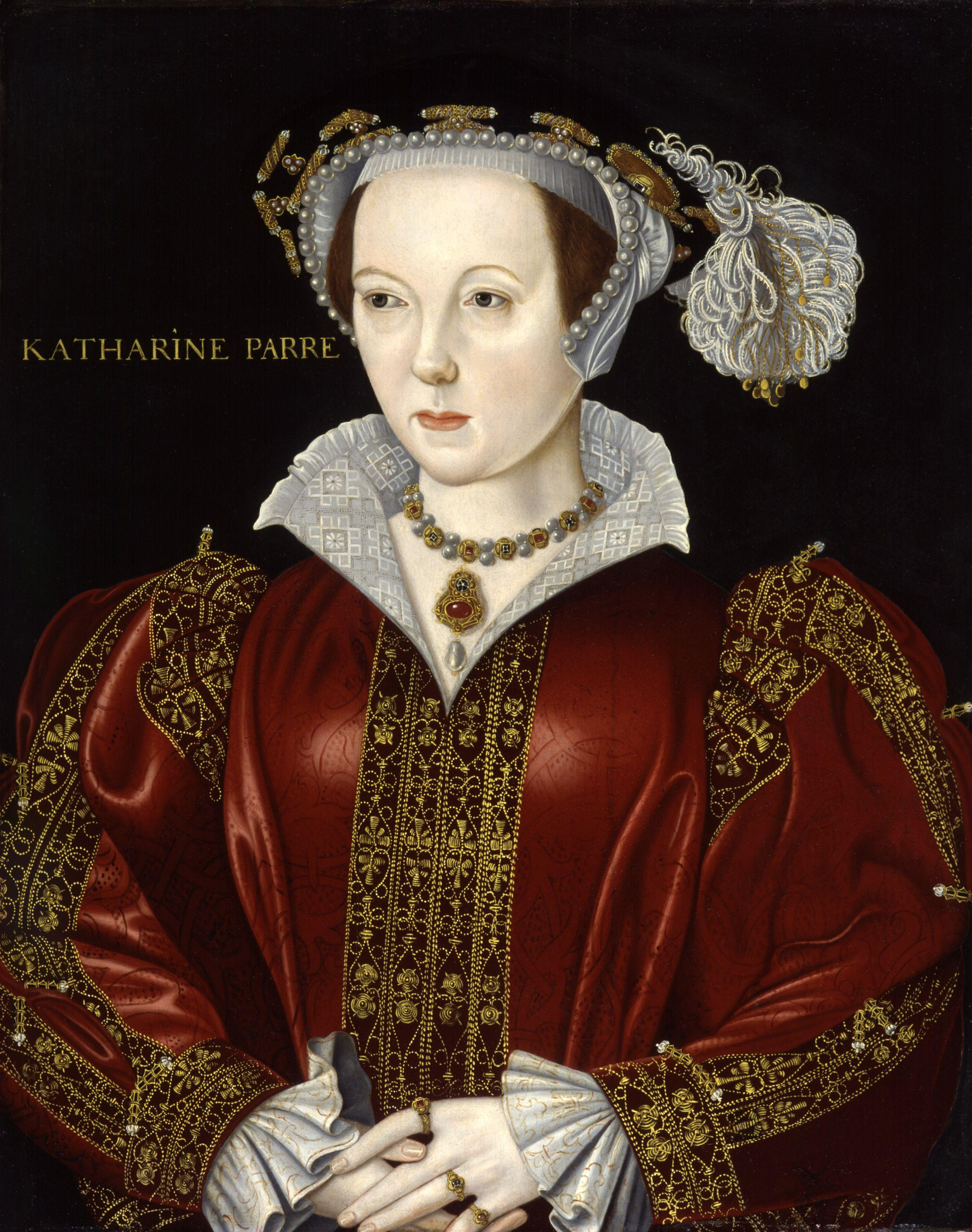
The survivor. The scholar. The first woman to publish a book in English under her own name.
Catherine Parr was thirty when she married Henry — already twice widowed, already wealthy, already deeply read in Reformation theology. She had no desire to marry Henry or become Queen. She was in love with Thomas Seymour, Jane Seymour's brother. But Henry made the offer and there was only one acceptable answer.
She did the job extraordinarily well. She brought all three of Henry's children — Mary, Elizabeth, and Edward — back into the royal household and oversaw a serious education program for the younger two. She acted as regent as Catherine of Aragon had previously, during Henry's French campaign in 1544, and she published two religious works during the marriage and a third afterwards. She came close to her own arrest in 1546 over her reformist views, talked her way out of it in a single private interview with Henry, and managed to survive despite having powerful enemies working for her downfall.
After Henry's death in January 1547, she finally married Thomas Seymour, but died in childbirth in September 1548, leaving a daughter who disappears from the historical record within two years.
Catherine Parr is the wife you take seriously on her own terms. Theologian, regent, stepmother to two future queens and a king, author, survivor. We remember her for being The Queen that outlived Henry, but the"survived" half of the rhyme really doesn't do her justice.
What they actually share
The rhyme tells you they were Henry's. The history tells you they were six very specific women — a Spanish regent who beat the Scots in battle, a French-educated reformer who broke the church, a quiet political operator who learned from watching her two predecessors die, a Cleves princess who failed to please Henry but managed the cleanest exit anyone ever got, a teenage girl who loved another man, and a published theologian who acted as head of state.
They are not interchangeable. They are not just "Henry's wives." And the more you read about each of them, the harder it gets to choose a favourite.
We hope we've inspired you to go down the rabbit hole and explore each of these remarkable women.
Take them with you
If you want them all on one mug — the Six Wives portrait mug puts all six queens together in a single Holbeinesque line-up.
Or take them one at a time:


And if you'd rather have the king himself making the case for them every morning, the Henry VIII portrait mug is right where you'd expect him to be: holding court.
Next week down the rabbit hole: the complete Tudor history gift guide. The week after: a beginner's guide to the seven kingdoms of Anglo-Saxon England — because the Tudors weren't the start of the story.